The Plane and the Ledger: Planning a Somerset Workshop Handover Before the Master Steps Back
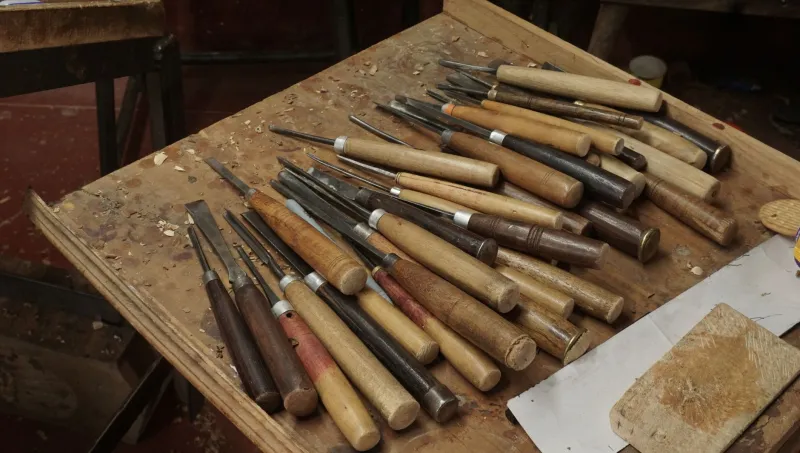
Every owner-led workshop has a plane on the bench and a ledger in the drawer. One is the visible craft; the other is the quiet record of clients, suppliers, prices and promises. When the owner steps back, both have to be handed on. Yet in many Somerset trade businesses, succession is treated as a private decision to be made at the last possible moment. The result can be a closure that nobody intended, and a loss of local skill that customers and suppliers feel for years.
The question is not only who inherits the business. It is who takes the plane, who reads the ledger, and who keeps the telephone answered while the handover takes place.
The difference between closing and handing on
A closure is an event. A handover is a process. For a sole trader or a family workshop, the two can look similar from the outside: the van stops visiting, the sign comes down, the phone goes quiet. But the reasons are different. A closure often happens because no successor was trained, no records were organised and no conversation was had with the people who depended on the business.
Somerset has a long tradition of small firms built around a named craftsperson. That personal reputation is an asset, but it is also a risk. If the business is inseparable from one pair of hands, the owner's retirement can become the firm's expiry date. Planning continuity means separating the reputation from the individual without losing the trust that made it.
What the business actually owns
Owners often begin with the physical assets: tools, machinery, stock and premises. These matter, but they are not the whole business. A workshop may also own client records, supplier accounts, outstanding warranties, design drawings, maintenance schedules, training notes and a local reputation built over decades. Some of these are easy to value. Others are not.
A practical handover starts with an inventory that is broader than the insurance list. It should record what the business does, who it does it for, where the materials come from, which jobs recur and which records are essential. A stonemason's client list is not the same as a joiner's, and a repair business may depend on photographic records of past work. The point is to identify what a successor would need in order to serve customers well from the first week.
Valuing tools, stock and goodwill
Valuation is where sentiment and commercial reality often collide. A well-used tool may be priceless to the person who bought it and modest to a buyer. Stock may have been accumulated for specific commissions rather than general sale. Goodwill may be strong in the local area but difficult to prove in a balance sheet.
Independent advice is worth taking early. An accountant can help with the numbers, but the owner should also speak to someone who understands the trade. A second workshop owner, a Guild member or a respected supplier may have a clearer view of what the assets are actually worth in the local market. The aim is not to strip the business of its history. It is to arrive at a figure that a successor can finance and sustain.
Client records and the trust they carry
Client records are the most sensitive part of many handovers. They contain contact details, property access notes, past work, complaints and preferences. They are also a commercial asset. Any transfer needs to be handled lawfully and carefully, with attention to data protection and to the expectations of the client.
Beyond the legalities, there is a practical courtesy. Customers who have dealt with the same craftsperson for twenty years deserve to know who is taking over and how to reach them. A short letter, a workshop open afternoon or a personal telephone call can do more for continuity than a new website. The successor inherits not only the records but the manner in which the business has treated people.
Training a successor before the gap appears
Succession is often discussed as a transfer of ownership. It is also a transfer of tacit knowledge: how to read a particular stone, how to source a matching timber, how to calm a worried client, how to price a repair that is not quite like the last one. That knowledge cannot be downloaded in a week.
Where a successor is known, the handover should include time on the tools together. Even six months of shared jobs can make a difference. The outgoing owner should gradually step back from client calls and supplier negotiations, allowing the successor to build relationships while support is still close at hand. If no family successor exists, the same principle applies to a manager, a long-serving employee or an external buyer. The training period is not a formality; it is the bridge between one reputation and the next.
Keeping suppliers and neighbours in the picture
Trade businesses run on relationships. Timber merchants, stone yards, ironmongers, hauliers and local agents all need to know when a familiar account is changing hands. Early notice allows credit arrangements to be reviewed and orders to continue without interruption. It also gives suppliers a chance to flag practical issues, such as outstanding balances or special order arrangements.
Neighbours and fellow traders matter too. In a small Somerset town or village, the workshop may be part of the local business rhythm. A quiet word with the neighbouring firms can prevent rumour from filling the gap. The Guild's community-minded approach is relevant here: continuity is easier when the wider trade network knows what is happening and can help.
A timetable for the handover
A workable succession plan usually has a horizon of two to three years, not two to three months. The early stage is about understanding the business: its true assets, its dependencies and its risks. The middle stage is about preparing people: training a successor, introducing them to clients, and documenting the routines that have lived in the owner's head. The final stage is about transfer: legal agreements, insurance, accounts, premises and a clear date for the change.
Not every owner will follow that timetable exactly. Some businesses transfer quickly; others need a longer run-in. What matters is that the plan is written down and reviewed. A handover that exists only as an intention is easily overtaken by illness, fatigue or a change in family circumstances.
The community argument for planning early
It is tempting to treat succession as a private matter. But the closure of a respected workshop has public consequences. Customers lose a trusted repairer. Suppliers lose an account. Apprentices lose a route into the trade. A local economy loses a small but steady source of skill and employment.
Planning continuity is therefore not only about securing a retirement. It is about keeping craft and trade capacity in Somerset. The owner who prepares a handover is doing something practical for the next generation, even if that generation is not their own. They are making sure that when the master steps back, someone else can pick up the plane, open the ledger and carry on.