Mending as a Trade: Why Somerset's Repairers Deserve a Guild Mark
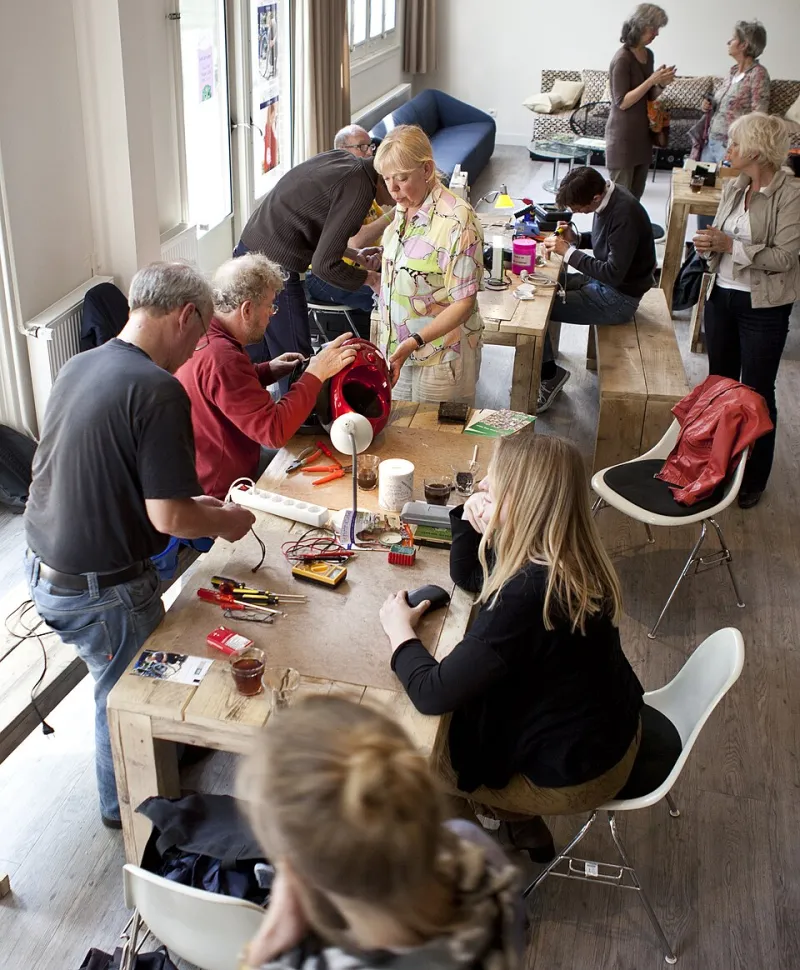
Photo: Ilvy Njiokiktjien, CC BY-SA 3.0, via Wikimedia Commons
On a wet Tuesday in Frome, the queue at a village hall stretches past the cake table. A bicycle wheel, a table lamp, a wooden plane and a broken sash window await attention. The volunteers behind the bench are not amateurs in any meaningful sense. They diagnose faults, source parts, assess safety and explain to owners why a repair is—or is not—worth pursuing. Similar scenes unfold in Wells, Glastonbury, Taunton and Minehead. Beyond the halls, independent tradespeople are reviving furniture, garden tools and heritage fittings in workshops that rarely appear in economic development strategies.
Repair is skilled work, not a hobby
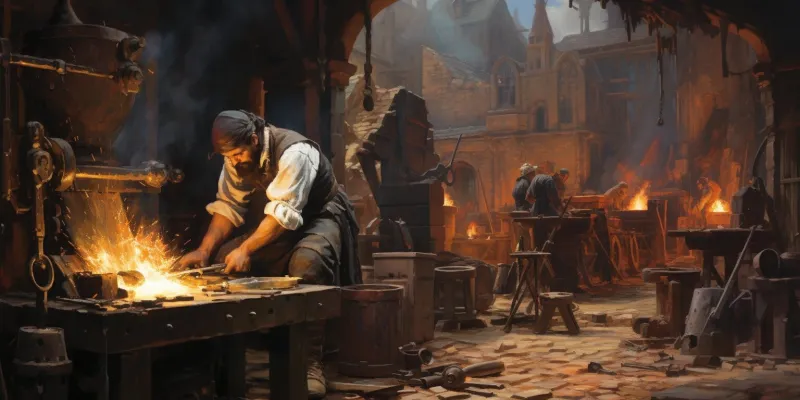
The repair economy is often described as a response to waste. That is true, but it is an incomplete description. A mender must understand materials, tolerances, historic fabric and the limits of reversibility. A furniture restorer working on a Victorian chair has to recognise original finish, hide glue and structural weakness. A tool repairer assessing a century-old plane needs to know whether the iron can be saved, the sole flattened or the handles replaced without destroying value. An electrician asked to revive a heritage fitting must balance conservation with modern safety standards. These are not interchangeable tasks, and they are not learned by watching a short video.
Yet the training system still tilts towards new build. Apprenticeships and college courses reward the construction of new work; repair skills are often acquired piecemeal, through family businesses, conservation workshops or the informal networks around repair cafés. That leaves a gap in recognition. A guild mark for repair would not replace existing qualifications. It would give customers a way to identify competent practitioners, give menders a route to continuing professional development, and give insurers and procurement officers a framework they can trust.
What guild recognition could look like
A Somerset repair register could be modest and practical. Applicants might demonstrate competence in a specialist area—furniture, metalwork, electrical fittings, clocks, tools or building fabric—and agree to a code of practice covering assessment, record-keeping and reversible intervention. A tiered structure would allow experienced menders to mentor others and would create a route for newcomers who have completed short courses but lack a formal apprenticeship. The register could sit alongside existing trade bodies rather than compete with them. The important point is that repair would be visible as a trade, not a charitable sideline.
Training routes matter just as much. The county has workshops, colleges and heritage sites that could host short courses in diagnosis, sourcing obsolete parts, safe electrical work and conservation-grade repair. Some of this already happens, but it is scattered. A coordinated programme—part-funded by skills budgets and supported by manufacturers and suppliers—would make repair a more credible career path for young people who want to work with their hands without committing to new-build construction.
The procurement argument
Local procurement is the third leg of the case. Councils, housing associations, schools and heritage bodies own a great deal of furniture, fittings and equipment. Too often the default is replacement. A repair-first clause in relevant contracts would require suppliers to assess whether an item can be economically and safely repaired before specifying new. This is not a mandate for sentimental retention. It is a requirement to consider whole-life cost, carbon and cultural value. For heritage assets, repair-first should be the norm unless there is a clear conservation reason to replace.
Somerset Council and the county's larger buyers could include repair in social value scoring, just as they include local employment and apprenticeships. A simple question—what proportion of the contract will be delivered through repair, reuse or local servicing?—would shift behaviour without creating a heavy bureaucracy. Parish and town councils can do the same on a smaller scale, from benches and noticeboards to street furniture and community buildings.
Practical steps for customers
For households and small businesses, the first step is to ask for a proper assessment rather than a quick verdict. A written diagnosis should identify the fault, the proposed method, the parts needed and the risks. Ask whether the repair is reversible, especially on antique or heritage items. Ask what guarantee is offered and whether the mender carries insurance. Keep a record of the work, including photographs before and after; this is useful for insurance and for future maintenance.
It also helps to be realistic about cost. A repair that takes three hours of skilled time may not be cheaper than a budget replacement, but it often is when the original item is well made, repairable and locally supported. The calculation changes again when the alternative is a landfill skip and a new item with a short service life.
What councils can do
Councils can support repair without becoming repairers. They can provide secure, affordable space for repair cafés and tool libraries. They can help with insurance and safeguarding advice. They can fund training bursaries and include repair in waste prevention campaigns. They can also use their own estates to demonstrate repair-first practice, from listed buildings to office furniture.
The risk is that repair remains a volunteer story while the paid trades struggle for recognition. That would be a loss for Somerset. A guild of menders would not solve every problem—parts availability, consumer expectations and liability all need careful handling—but it would give the repair economy a professional spine. The bench at the end of the row deserves the same respect as the new-build workbench. It is where skill, memory and local supply chains meet.
A modest proposal
Somerset Guild should convene a working group of menders, trainers, insurers and buyers to test a repair register in 2026. Start with three specialisms, publish the standards, and measure demand. If the response is anything like the queues at the village halls, the case will make itself.