A Circuit of Edges: Shared Sharpening for Somerset Workshops
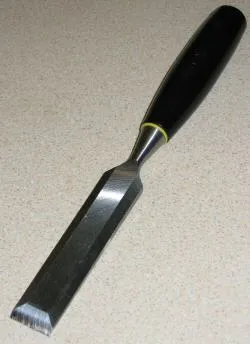
Photo: The original uploader was Dflock at English Wikipedia., CC BY-SA 3.0, via Wikimedia Commons
A chisel that will not pare cleanly, a plane iron that tears rather than slices, a saw that wanders from the line: these are small failures that cost a workshop dear in time, material and temper. Yet for many Somerset businesses, arranging a sharpening service is a stop-start affair. A single bench may not generate enough work to justify a mobile sharpener's journey, and posting tools away introduces delay and risk. The answer may lie in the same instinct that has long sustained trade in the county: several businesses acting together without losing their individual voice.
The case for a collective round
A roving sharpening circuit is a simple idea. A handful of workshops within a sensible radius agree to book a mobile sharpener on the same day, with the sharpener moving from one premises to the next in a planned sequence. Each business pays for its own tools, but the collective booking gives the sharpener a viable day's work and gives each workshop a predictable service at a fairer cost.
The economics are straightforward. Travel, setup and minimum call-out charges make up a large share of a small sharpening bill. When those costs are spread across four, six or eight businesses, the per-item price falls without anyone being asked to compromise on quality. The arrangement also suits Somerset's geography. Workshops in the Mendips, the Quantocks, the Levels and the market towns are often separated by distances that are short in miles but long in working time. A circuit can be clustered around a natural route: Wells and Shepton Mallet, say, or Taunton and the villages to its west, or Frome and the eastern edge of the county.
This is local procurement in its most practical form. It is not only about buying materials from nearby suppliers, but about organising local services so that small businesses can access the expertise they need without carrying the full cost of the journey themselves.
Mapping the circuit before booking the sharpener
A circuit works best when one workshop agrees to act as coordinator for the round. That role need not be onerous, but it should be clear. The coordinator keeps the list of participating businesses, circulates the booking form, confirms the route with the sharpener and holds the timetable together.
Before approaching a sharpener, the group should settle a few practical questions. How many businesses are involved, and where are they located? Is the sharpener to work on site at each premises, or will tools be dropped at one or two collection points? What is the minimum batch each workshop can offer? Is the round to run monthly, quarterly or seasonally? Which day of the week suits the trade best? A workshop that is quiet on a Monday may be frantic on a Friday, and the sharpener will need a route that can be completed without rushing.
An asset list is essential. Each business should record the tool type, size, approximate condition, ownership and any deadline. Chisels, plane irons, spokeshaves, drawknives, saws and marking knives all take different treatment. A saw may need jointing and setting as well as filing; a plane iron may need the back flattened as well as the bevel honed. The list should be exchanged with the sharpener in advance so that time and abrasives can be planned. Tools should be labelled clearly, preferably with a durable tag that survives transit, and each workshop should keep a copy of the list.
A booking method that keeps control local
A simple form is better than a complicated system. Two weeks before the proposed visit, the coordinator sends out a booking sheet with columns for tool type, quantity, notes and collection preference. Each workshop returns its list by a stated cut-off. The coordinator consolidates the lists and sends them to the sharpener, who confirms the price, the date and any tools that cannot be handled in the time available.
Payment should be agreed at the outset. The cleanest arrangement is usually for each workshop to pay the sharpener directly for its own work, with the coordinator merely confirming the aggregate booking. If a single invoice is preferred, the terms should be written down: who pays whom, when, and what happens if a workshop withdraws after the cut-off. A deposit may be sensible for a first round. The aim is to keep the arrangement transparent so that no one feels they are subsidising another business or carrying an unexpected risk.
The coordinator should also allow for the awkward job. A damaged iron, a saw with a broken tooth or a tool that needs more work than expected should have a clear route: the sharpener advises the owner directly, and the owner decides whether to proceed. The coordinator should not become an intermediary for every technical judgement.
What good sharpening looks like
A shared circuit only earns its place if the standard is consistent. Before the first visit, the group should agree what acceptable work looks like. For edged tools, that means the original geometry is respected, the bevel is flat and true, the back is prepared where necessary, and the edge is free from rounding or overheating. Bluing at the tip is a warning sign, not a cosmetic detail. For saws, it means teeth that are jointed to a consistent line, set appropriately for the work and sharpened without altering the plate beyond what is needed.
A short written standard, no more than a page, is enough. It can set out the checks each workshop will make on return: a test cut in a known timber, a visual check of the bevel, a check that the tool seats correctly in its plane or handle. Each workshop should sign off its own tools at collection and record any rejection immediately. The sharpener should have a stated policy for redoing unsatisfactory work. This is not an expression of distrust; it is the same discipline that any trade applies to a supplied component.
Why a guild network suits this work
A guild-style network is well suited to co-ordinating a sharpening circuit because it already holds the two things a loose group lacks: trusted introductions and a shared standard. Somerset Guild can maintain a list of sharpeners who have agreed to work to the published standard, provide a template booking sheet and a simple route map, and offer a neutral point of contact if a question arises about quality or turnaround. It can also help continuity if a sharpener is unavailable, by putting the group in touch with another approved provider without dissolving the local relationship.
What the guild should not do is stand between the workshop and the sharpener. The personal relationship matters. A sharpener who knows a workshop's tools, its timber and its habits will give better advice than an anonymous postal service. The circuit should preserve direct contact: the sharpener speaks to the owner about a difficult iron, notes the peculiarities of a favourite chisel, and returns the tool with a word about how it is cutting. The coordinator keeps the administration together; the trade keeps the conversation.
Start small, measure, repeat
A first circuit need not cover the whole county. Three workshops and one sharpener over a single quarter is enough to test the model. Record the turnaround, the cost per item, the number of tools rejected and the time spent coordinating. Share the results honestly. If the round works, add a second cluster or move from quarterly to monthly. If it does not, adjust the route, the booking form or the standard before trying again.
The edge tool is a modest object, but it carries the reputation of the workshop that uses it. A shared sharpening round is a modest piece of organisation, but it carries the same principle: Somerset businesses are stronger when they procure locally, set standards together and keep the human relationship at the centre of the trade.