Used But Sound: A Somerset Buyer's Guide to Secondhand Trade Tools in 2026
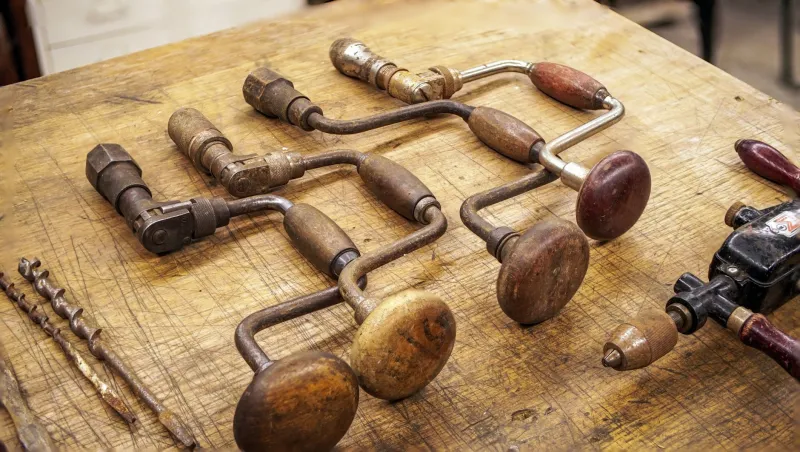
Tool prices have a way of concentrating the mind. For an apprentice assembling a first kit, or a small firm adding a second bench, the difference between new and used can be the difference between starting and waiting. Somerset has a long tradition of practical buying: farm dispersal sales, auction rooms, tool fairs and the noticeboard at the builders' merchant. In 2026, online marketplaces have widened the search area, but they have also raised the stakes. Used kit is only a bargain if it is safe, complete and legal.
Why used makes sense—and when it does not
A well-made chisel, plane or cast-iron machine can outlast several owners. Much of the kit sold at farm sales and house clearances was bought for a single job and then stored. For apprentices, a used set of quality hand tools often represents better value than a new budget set, provided the steel is sound and the handles are not split. For small firms, a secondhand bench drill, morticer or extractor can release cash for training, insurance and the jobs that actually generate revenue.
But used is not automatically sensible. Safety-critical items deserve particular caution. Personal protective equipment should generally be bought new, because its history is unknown and its condition can be compromised in ways that are not visible. Precision measuring tools may need calibration, and electrical equipment needs testing before it is used in a workplace. Battery platforms are another consideration: a bargain drill with an obsolete battery format can become expensive when replacements are unavailable.
Where to look across Somerset
Auction rooms in Taunton, Yeovil, Frome and Bridgwater remain useful for trade disposals, workshop clearances and mixed lots. Read the catalogue carefully, attend the viewing, and remember that the buyer's premium and VAT can add a substantial amount to the hammer price. Collection deadlines matter; a cheap lathe is not cheap if it needs a hired van and two people to move it within 48 hours.
Farm dispersal sales on the Levels and around the county can be excellent for hand tools, benches, compressors and workshop equipment. Farm kit is often maintained, but it may be three-phase, covered in oil or adapted for a purpose that does not suit a small workshop. Tool fairs and car boot sales are better for hand tools and spares than for complex machinery. Online marketplaces are best used with a clear search list, a firm budget and a willingness to walk away.
Vetting sellers online
Ask for a photograph of the serial plate and the fault area, not just a glamorous shot of the whole machine. A seller who cannot provide a close-up is either unable or unwilling to show the condition. Check the seller's history, prefer collection in person and avoid paying by bank transfer to someone you have not met. Meet at a fixed address rather than a lay-by, and take someone with you if you are buying high-value equipment.
Ask why the item is being sold. A genuine upgrade, a bereavement or a workshop closure will usually produce a coherent answer. A vague story combined with a price far below market value is a reason to pause. For branded power tools, check that the charger, batteries and accessories are included; replacement parts can erode the saving quickly.
Safety checks before you hand over cash
For electrical tools, inspect the plug, lead and casing for damage. Look for UKCA or CE marking, correct voltage for the intended use, and guards that operate freely. Site tools are often 110V, which requires a suitable transformer; a 230V tool may be fine in a workshop but not on a construction site. Ask when the item was last used and whether it has been portable appliance tested. In a commercial setting, you will need to arrange testing and a risk assessment before use.
For petrol equipment, check compression, fuel lines and exhaust condition. For hydraulic kit, look for leaks and contaminated fluid. For stationary machines, check the emergency stop, guards and extraction connections. Spares availability is part of safety: a machine with no available brake or guard is not a bargain. Before buying, search the manufacturer's parts diagrams for the model number and confirm that consumables and critical components can still be sourced.
Stolen goods: the questions that protect you
Buying stolen tools is an offence, and it also damages the trades. Ask for proof of purchase or a previous service record. Check the serial number and, where possible, search the item on Immobilise, the UK property register. Keep a receipt that records the seller's name, address, date and the item's serial number. If the seller refuses to provide basic details, walk away.
Be wary of any deal that depends on speed, secrecy or a remote payment. A legitimate seller will not object to a written receipt. If you later discover that an item is stolen, report it to the police and to the marketplace; possession of stolen goods can be difficult to defend without evidence of a normal purchase.
Budgeting for servicing and spares
Set aside 20–30% of the purchase price for servicing, repairs and missing accessories. A used saw may need a new blade, a used drill may need brushes, and a used extractor may need filters. If you cannot test the item before buying, factor in the cost of an electrician or machine engineer. For small firms, insurance and PUWER risk assessments should be part of the calculation, not an afterthought.
When new still wins
New kit makes sense for safety-critical PPE, for battery platforms where several workers need interchangeable packs, and for precision equipment that must be calibrated. It also makes sense when the used market offers no local support and the machine is central to your work. The decision should be based on whole-life cost, not the sticker price alone.
A practical checklist
Take a torch, a straight edge, a multimeter if you are competent, and a list of model numbers. Ask for the manual. Check guards, leads, plugs, serial plates and spare-part availability. Confirm the voltage. Confirm the seller's identity. Get a receipt. Budget for a service. If any answer feels evasive, leave it. Somerset's secondhand market is deep enough that another sound tool will come along.